English
 中文简体
中文简体 русский
 Español
Ceramic CBN Grinding Wheel Centerless Grinding Machine
Cat:Centerless Grinding Machine
It is mainly used for precision grinding of outer circles of engine inlet and exhaust valve stems, bearings, and various shaft products.
MoreContent
A CNC Valve Grinding Machine earns its place on a production floor when it can hold a consistent valve seat angle across a full batch, switch between valve types quickly through stored programs, and process hardened seat materials without operator dependent variation. Compared with manual grinding or lapping, CNC controlled valve seat grinding delivers tighter angle tolerance and far more repeatable output once a program has been set, which is why it has become the standard approach for engine remanufacturing shops, locomotive component suppliers, and commercial vehicle parts producers.
The sections below explain how a CNC valve grinding machine works, how it compares with manual lapping, what valve types and materials it commonly handles, and what to look for when working with a valve seat grinding machine manufacturer.

A CNC valve grinding machine reconditions or manufactures the sealing surface of an engine valve seat by rotating a grinding wheel against the seat angle while the workpiece is held and indexed under computer control. Rather than relying on an operator to judge angle and depth by feel, the CNC control manages spindle speed, feed rate, and dwell time according to a stored program, which is what keeps seat angle and surface finish consistent from the first part to the last.
The machine removes a controlled layer of material from the valve seat to restore or establish the correct sealing angle, ensuring the valve closes tightly against the seat during engine operation.
Most configurations pair a precision spindle and grinding wheel head with a CNC controlled indexing table or fixture, along with programmable angle presets that can be recalled for different valve families.
Understanding the mechanics helps explain why CNC control makes such a measurable difference in output quality.
A high speed spindle drives the grinding wheel against the valve seat at a set angle, typically between 30 and 45 degrees depending on engine design. Wheel dressing keeps the abrasive surface true, which directly affects how consistent the finished seat angle turns out to be across repeated cycles.
On a CNC valve grinding machine, the angle head position, feed rate, and grinding depth are all managed through a stored program rather than manual hand wheels. This is the main reason CNC equipment produces tighter batch to batch consistency than manual grinding, where each seat depends on the operator resetting angle and depth by hand.
Valve grinding and valve lapping are often confused, but they serve different purposes in valve seat reconditioning. The table below outlines the practical differences.
| Attribute | Valve Grinding (CNC) | Valve Lapping (Manual) |
|---|---|---|
| Material Removal Method | Abrasive grinding wheel against seat angle | Abrasive paste worked by hand rotation |
| Angle Correction Capability | Corrects worn or damaged seat geometry | Refines contact only, cannot fix angle errors |
| Repeatability | Consistent across full batch runs | Varies with operator technique |
| Typical Use Case | Production reconditioning and new manufacturing | Light touch up after grinding or minor sealing issues |
A CNC valve grinding machine is generally built to handle a wide range of valve families used across internal combustion and diesel engines.
On the material side, valve seats are commonly produced from stainless steel, nickel based alloys, and hard faced stellite surfaces, all of which respond differently to grinding wheel selection and feed rate, which is covered further in the grinding wheel section below.
Angle accuracy is the single most important quality measure in valve seat reconditioning, since even a small deviation affects how tightly the valve seals under combustion pressure. The chart below compares typical angle tolerance across common grinding methods, where a smaller value indicates tighter accuracy.
Typical valve seat angle tolerance by grinding method, lower values indicate tighter accuracy
A CNC Valve Grinding Machine fitted with servo control commonly holds angle tolerance well under manual grinding results, which matters most on high compression engines where even minor seat angle deviation affects sealing performance and long term valve wear.
Batch size influences which grinding approach delivers better shop floor throughput. The chart below compares average valve seats processed per eight hour shift between manual grinding and CNC controlled grinding across three batch categories.
Average valve seats processed per eight hour shift, manual grinding versus CNC controlled grinding
The gap widens considerably on larger repeat batches, since a CNC valve grinding machine only needs the program set once, after which every following seat follows the same automated cycle without further manual adjustment.

Engine remanufacturing and valve reconditioning shops have shifted steadily toward CNC controlled grinding as engine tolerances have tightened and repeat order volume has grown. The line chart below illustrates this general shift from 2019 through 2026.
Illustrative shift in production hours between CNC controlled and manual valve grinding from 2019 to 2026
The radar chart below scores manual grinding and CNC valve grinding across six operational dimensions on a scale from zero to ten, giving a fuller picture than a single accuracy figure alone.
Relative scoring of manual grinding versus CNC valve grinding across six operational dimensions
Manual grinding scores reasonably well on ease of operation for very small one off jobs, since no programming step is required, but a CNC Valve Grinding Machine pulls well ahead on precision, repeatability, automation, and batch efficiency, which is where production shops feel the difference most directly.
Wheel selection has a direct effect on finish quality and how long the wheel holds its profile before redressing is needed.
Cubic boron nitride wheels hold their edge well against hardened valve seat materials, making them a common choice for high volume reconditioning work.
Diamond abrasive is often selected for hard faced stellite or nickel alloy seats, where standard abrasives wear down too quickly to hold a consistent angle.
For standard steel valve seats without hard facing, aluminum oxide wheels remain a practical and widely used option for routine reconditioning work.
Valve seat grinding sits at the center of engine reliability across several heavy duty and precision driven sectors.
Across these sectors, an industrial valve grinding machine is typically expected to run consistent programs across long production shifts, since engine builders depend on stable seat geometry for downstream assembly and testing.
Routine maintenance keeps a CNC valve grinding machine holding tight tolerance over years of continuous operation rather than gradually drifting out of specification.
Jiangsu Gist Technology Co., Ltd traces its roots to 2012 and was reorganized under its current name in April 2020, operating from a facility in the Industrial Concentration Zone of Wulie Town, Dongtai City, with a factory building area of more than 11,000 square meters completed in early 2022. The company integrates development, design, production, manufacturing, sales, and after sales service under one roof, supported by a technical design team and a skilled front line workforce.
As a CNC valve grinding machine manufacturer and valve grinding machine supplier, the company produces high precision automation equipment used across core engine components for locomotives, generator sets, mining machinery, commercial vehicles, and ships. It has maintained long term cooperation with international engine parts and power management companies including Germany based MAHLE and United States based EATON, and has built close partnerships with domestic engine valve manufacturers such as Chongqing Sanai Hailing Industrial Co., Ltd., Jinan Ward Auto Parts Co., Ltd., and Dengyun Co., Ltd. together with Huaiji Lunar Valve Co., Ltd.
With independent import and export capability, equipment from this valve seat grinding machine manufacturer has reached more than 20 countries and regions including Germany, Japan, Turkiye, and Iran. For workshops exploring an OEM valve grinding machine or a custom valve grinding machine configuration, this combination of in house design capability and established international customer relationships supports both standard equipment orders and project specific machine requirements.
It is a machine tool that reconditions or manufactures engine valve seats using a CNC controlled grinding wheel to hold a precise sealing angle across repeated cycles.
A spindle driven grinding wheel is positioned against the valve seat at a set angle, removing a controlled layer of material while the CNC control manages feed rate and depth.
Grinding removes material to correct seat angle and geometry, while lapping only refines surface contact using abrasive paste and cannot fix an out of angle seat.
Intake and exhaust valve seats across locomotive, generator set, marine, commercial vehicle, and mining machinery engines can typically be processed.
Servo controlled CNC valve grinding machines commonly hold angle tolerance well tighter than manual grinding, supporting consistent sealing performance across a full batch.
CBN wheels suit hardened seats, diamond wheels suit stellite and hard faced seats, and aluminum oxide wheels work well for general steel seats.
Yes, stainless steel valve seats are commonly processed, with wheel selection and feed rate adjusted to suit the material hardness.
Locomotive manufacturing, generator set production, mining machinery, commercial vehicle parts, and marine engine servicing all rely on valve grinding equipment.
Routine wheel dressing, spindle lubrication checks, coolant system inspection, and periodic CNC axis calibration keep the machine holding tolerance over time.
Cycle time varies by seat diameter and material, but stored programs allow repeat parts to run through the grinding cycle without additional manual setup time between pieces.
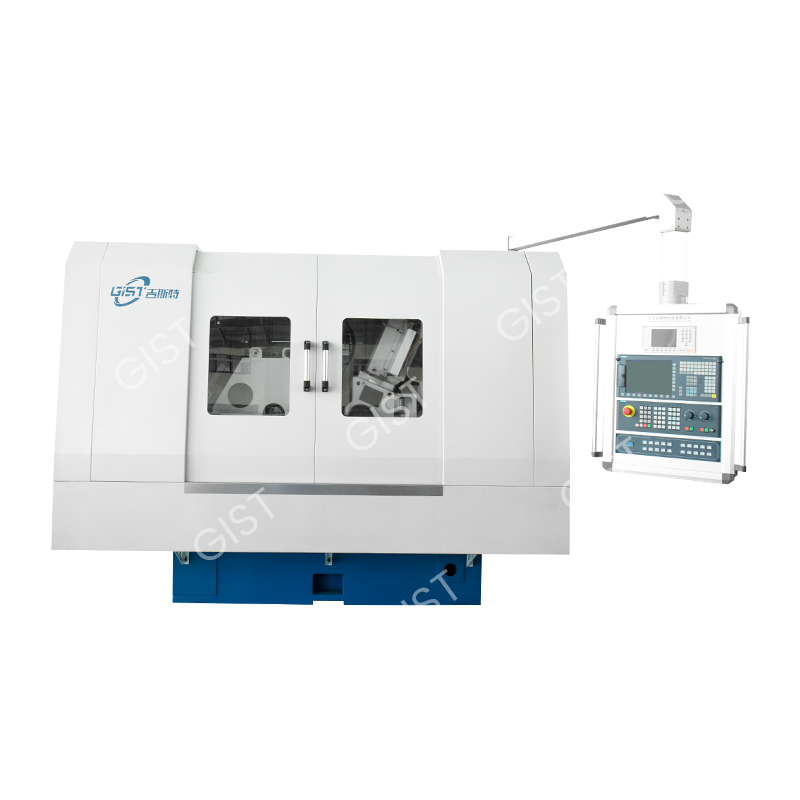
It is mainly used for precision grinding of outer circles of engine inlet and exhaust valve stems, bearings, and various shaft products.
More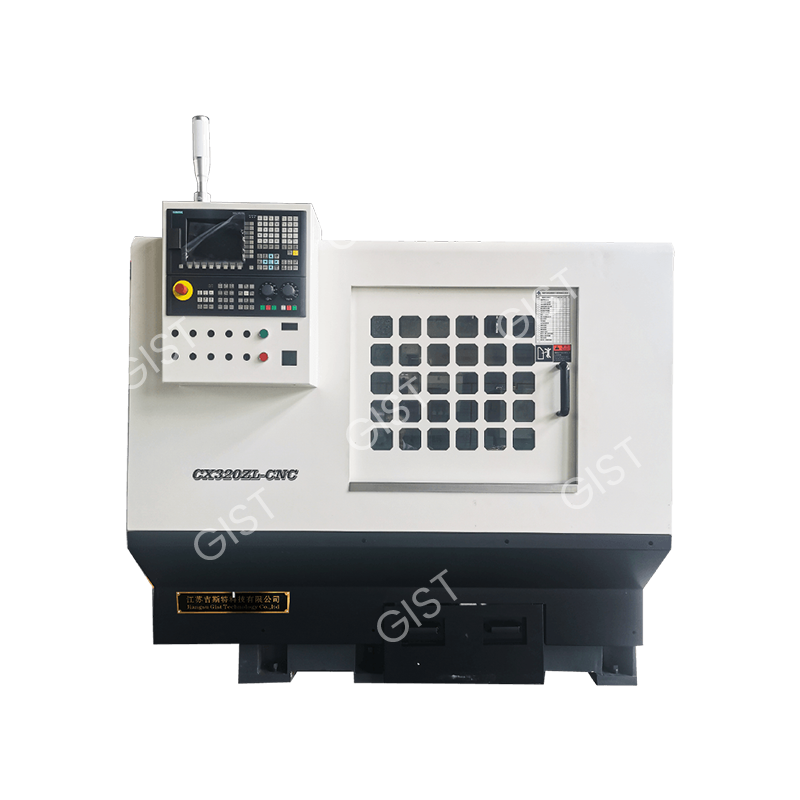
Category: CNC lathe Product Overview: The company has passed the certification of various systems such as ISO9001:2015 quality management system, ...
More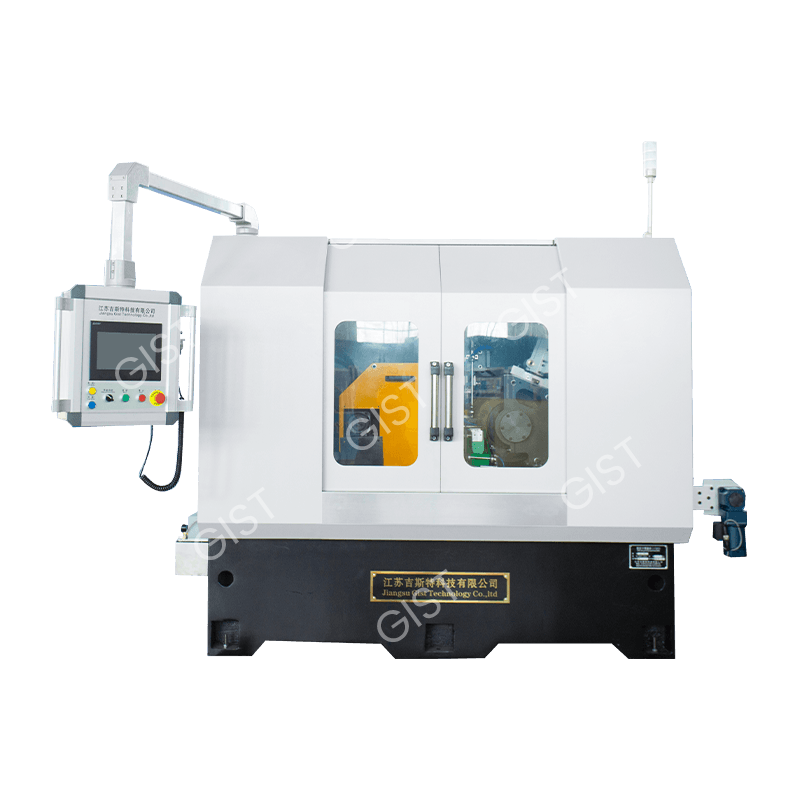
Category: Special valve CNC grinder Product Overview: The company has passed the certification of various systems such as ISO9001:2015 quality man...
More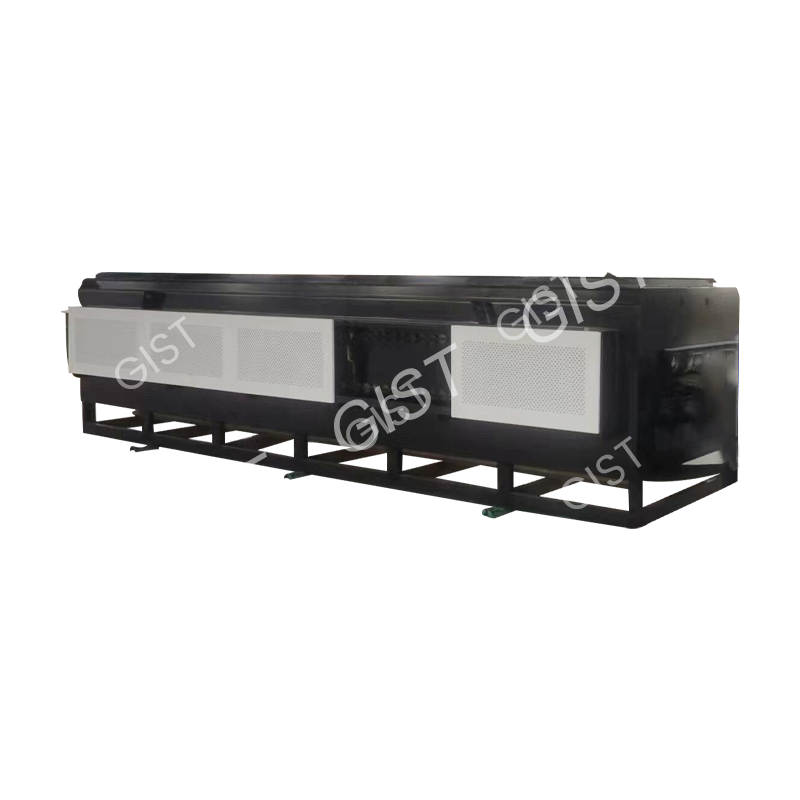
Category: Heat treatment equipment Product Overview: The company has passed the certification of various systems such as ISO9001:2015 quality mana...
More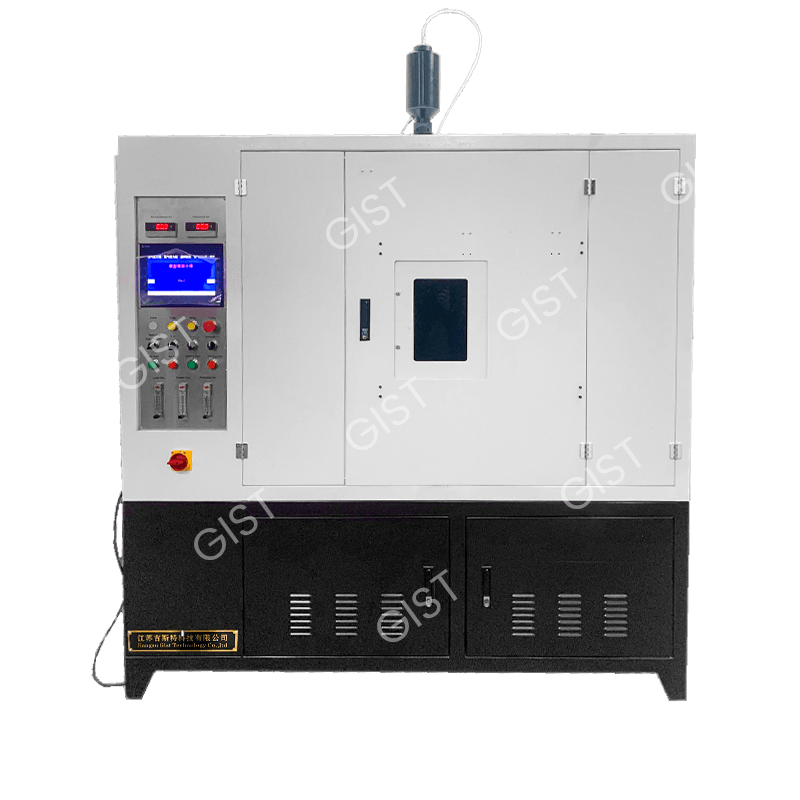
Category: Plasma welding equipment Product Overview: The company has passed the certification of various systems such as ISO9001:2015 quality mana...
More
Category: Production auxiliary products Product Overview: The company has passed the certification of various systems such as ISO9001:2015 quality...
More
Category: Production auxiliary products Product Overview: The company has passed the certification of various systems such as ISO9001:2015 quality...
More
Category: Production auxiliary products Product Overview: The company has passed the certification of various systems such as ISO9001:2015 quality...
More
Category: Production auxiliary products Product Overview: The company has passed the certification of various systems such as ISO9001:2015 quality...
More
Category: Production auxiliary products Product Overview: The company has passed the certification of various systems such as ISO9001:2015 quality...
More
 86-13584767515
86-0515-89500828
 No. 1, Industrial Concentration Area, Wulie Town, Dongtai City, Jiangsu Province
Product